Thứ Tư, 26 tháng 11, 2014

Fruit festival in Tien Giang

Tien Giang Province in the Mekong river cruise hosted the first ever national fruit festival in My Tho city from April 19 to 24

Tran Hoa Huy, a member of the organization board, said the festival would welcome over 100,000 guests and tourists. There are 350 rooms available for accommodation in My Tho City and in nearby provinces such as Long An, Ben Tre and HCMC. The recently opened Trung Luong Expressway makes My Tho City only a 40 minute drive from HCMC. Visit South Vietnam tours

With more than 700 stalls, the event displayed 2,000 tons of fruit from 24 provinces, including the well-known Hoa Loc mangoes, Lo Ren Vinh Kim star-apples, Chin Hoa durians and Hung Yen longans. Also, the festival features agricultural products and plant exhibitions, food fairs, firework displays and festivities at Cai Be floating market. Several national records are expected to be set during the festival too, including the largest map of Vietnam and the longest dragon made entirely of fruit.
Fruit festival in Tien Giang
Fruit festival in Tien Giang 


There would also be an awards ceremony to honor farmers, scientists and enterprises who have contributed to research and planting processes to deliver high-quality Vietnamese fruit to both local and global markets.VAM HO BIRD SANCTUARY

Nguyen Minh Chau, head of the Southern Fruit Research Institute, said the country, and especially the Mekong Delta, boasts a wide variety of good fruit owing to favorable climate and soil.

Vietnam has a total of 776,000 hectares under fruit cultivation and can increase competitiveness compared to leading exporters Thailand and China if it invests more into seedling research, modern techniques and brand building.

The Fruit Festival will host a series of seminars on developing trademarks for Vietnamese fruit on the global market and measures to create and strengthen links between scientists, farmers, processors and local authorities to increase value.

This festival is set to become a five-yearly event.

Thứ Ba, 18 tháng 11, 2014

Where To Go In Vietnam: North Or South?

Many who visit Vietnam say it’s one of the most colourful countries in all of Southeast Asia. And they might argue that this is due, in part, to the distinct differences in culture and climate that exist between the north and the south of this spectacular nation.

Whether you decide to spend your time in the north or south may depend on what time of year it is. The north tends to experience cool, damp winters and hot dry summers, whereas the south has more of a consistent tropical climate that is broken by a rainy season between May and November.

The North Vietnam tours – When & Where

An ideal time to visit North Vietnam is between September and December when it isn’t too humid and not yet cold. That said, capital Hanoi tends to be temperate all year round.

Halong Bay
UNESCO listed Halong Bay tours as a World Heritage site due to its outstanding natural beauty and unique biological importance. Visitors who come to Halong Bay encounter formations of limestone islands that jut out of the water and are covered by jungle vegetation. It’s a dramatic sight and looks almost unworldly, as if the islands are floating on the water! Many of the rocks are hollow, with huge caves clustered inside them, and kayaking tours are one of the most popular ways to explore them.

Hanoi
As the cosmopolitan capital of Vietnam, many visitors fly into Hanoi and use it as the starting point to explore the country’s northern regions. Boasting thousands of years of rich history, Hanoi is the place to come to see ancient Buddhist temples, national museums and get a taste of Vietnam’s long and varied traditions. The Old Quarter is well worth a visit. Little-changed since the days of ancient Hanoi, the streets are named after the various trades and retail goods once sold on them.

Sa Pa
If small traditional towns, spectacular mountain views and rice terraces are what draw you to Vietnam, then head to Sa Pa. Buses depart from Hanoi, but you can expect an eight-hour journey. It’s worth it though, as Sa Pa feels like a step back in time to a more traditional Vietnam. The locals are friendly and visitors can trek by verdant rice paddies, dense forests and spectacular waterfalls.

The South Vietnam Tours – When & Where
Visit between December and April during dry season, when the temperature tends to be steadily in the high twenties (Celsius). Having said that, downpours during the rainy season from May to November tend to be short-lived and rarely put travellers off.
Ho Chi Minh City
Ho Chi Minh City is a bustling and at times chaotic place. It’s everything you would imagine from Vietnam’s largest city, only at 10 times the speed! As you fly in, you can see streets of scooters whizzing in and out traffic – so many in fact that streams of red and white lights can be seen from the plane. It’s a wild and wonderful place, with great shopping, a huge variety of dining options and fantastic nightlife. Many visitors come here for a few days of living it up, before heading to a quieter beach town to relax.

Da Lat
If you’re in Vietnam during the hotter months, Da Lat is a great option for a few days of cooler weather. It’s quite unlike anywhere else in Vietnam and is often referred to as ‘the city of eternal spring’. It’s not just the pleasant climate that draws in the crowds either; Dalat is surrounded by rolling countryside, huge waterfalls and forests and was once the playground for the elite of French colonial society.

Get away and relax in Da Lat
Nha Trang
Nha Trang is perhaps the most renowned beach resort town in the south of Vietnam. Popular with expats and international tourists alike, it’s more urban than other beach resorts in Vietnam, and for that reason is a sensible place to head for those who enjoy their creature comforts. You can also head here if you’d like to try a bit of scuba diving too!
Where To Go In Vietnam: North Or South?


Mekong Delta tours
Covering the southwestern portion of Vietnam, the expansive Mekong Delta is simply mind-blowing.  Boat trips down the Mekong River propel you straight into old-world Vietnam, and homestays in the area are becoming a popular option for those who want to really feel like they’re getting away from it all.

Thứ Năm, 6 tháng 11, 2014

Tips for safe dining of seafood in Halong

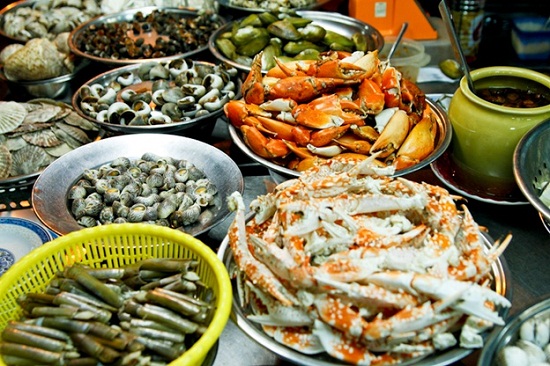
Halong, known as the world heritage city with thousands of caves and grottos, is also famous for its abundance of nutritious and delicious varieties of seafood like crab, prawn, fish, or sea-snail. Gourmets who come to Halong can hardy resist the taste of fresh seafood without the worry of gaining weight. However, there is always risk of food poisoning hidden in seafood. Below are some safety tips to avoid trouble with dining in Halong bay tours.

1. Avoid eating raw seafood in general

Raw seafood or unprocessed seafood may contain the Vibrio parahaemolyticus bacteria which is harmful for the digestive system. Moreover, the bacteria can live under high temperature (more than 80oC). Although sushi and sashimi is very tempting, try not to eat too much, esepecially from the dubious dining places. Fresh seafood in Halong Bay

2. Never eat raw crab
Tips for safe dining of seafood in Halong

Inside unprocessed Ha Long’s crab is a very dangerous parasitic bacteria named lung fluke that may mess up your respiratory system with symptoms like lead to severe cough, coughing up blood, or even cerebral paralysis. It is highly recommended that crabs have to be fully cooked for at least 20-30 minutes. Travel to Halong with Vietnam tours

3. Seafood shopping tips

Buying your own seafood in a market to bring back to your hotel and ask the chefs to cook for you is a very enjoyable experience. However, remember to choose ones which are still alive and fresh, because dead sea-animals, especially one that has shells, contain much higher level of bacteria or poisons.

4. Avoid drinking excessive beer while eating seafood

Scientists say drinking beer while eating seafood increases the probability of having gout or arthritis disease. Therefore, it is recommended that you limit your alcohol consumption when being served seafood.

5. Avoid having fruits/tea after having seafood

The reason is that the acid inside sour fruits may negatively affect the process of absorbing protein from seafood into your body. Besides, tannin from fruits may react with calcium and protein from seafood to stimulate your digestive system that leads to stomach-ache and vomiting. Same thing happens if you drink tea after a seafood meal.